
Crimson Dust & Salt Water: A Family Legacy Across Tsavo and the Swahili Coast

"The true test of bespoke travel design isn't just navigating wild terrain—it's creating an adventure where a grandmother in her seventies and a newlyweds couple in their twenties stand on the same earth, spellbound by the exact same moment."
The Unscripted Journey
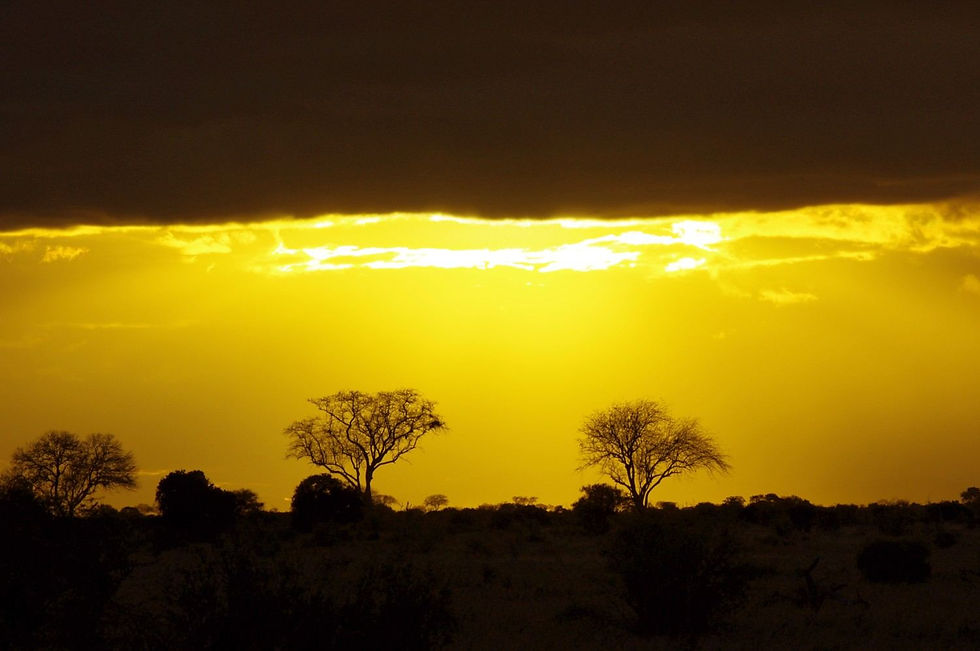
There is a precise moment when Kenya shifts from a destination on a map into something that lives under your skin. For our family, it happened on the third morning in Tsavo East. The air smelled of crushed wild sage and sun-baked earth. The horizon was an endless expanse of copper soil, broken only by ancient baobabs and the silhouette of Taita Hills in the distance.
Travelling as seven—my elderly parents who treasure quiet ease and slow mornings, my sister in her fifties with a deep appetite for local culture, a young newlywed couple hungry for high-energy game tracking, and myself—could have easily devolved into an exercise in compromise. Instead, by throwing out the rigid, off-the-shelf safari schedules and designing the journey around human rhythms rather than tourist checklists, Kenya unfolded like a masterclass in intergenerational harmony.


Part I: The Red Giants of Tsavo
Tsavo East does not coddle you with soft green lawns; it is raw, vast, and breathtakingly dramatic. Our home in the bush was an intimate, low-impact camp positioned right on the edge of the wilderness, built flat to the ground with zero stairs or awkward footings—a vital detail for my parents that allowed them to wander freely between our tented suites and the open lounge.
The magic of Tsavo is its legendary "red elephants"—monarchs of the savannah that dust themselves in the vivid crimson soil to shield against the African sun.
The Morning Track: We modified our custom 4x4 Land Cruiser with extra-low side steps and ultra-soft suspension. While the young couple sat up high by the open roof tracking lion prints with our tracker, my parents enjoyed cushioned, shaded seating with unobstructed window views.
The Aruba Dam Sundowner: As the heat of the day broke, we gathered near the waterhole. My sister and the young couple headed out on a short, guided foot safari with a private armed ranger. Meanwhile, my parents settled into canvas directors' chairs with chilled gin and tonics, watching hundreds of elephants converge at the water's edge as the sky turned a deep indigo.

Part II: The Coastal Transition
The greatest friction point in multi-stop African itineraries is usually the transit. Long, bone-jarring drives or chaotic flight layovers can drain the energy out of elderly travellers in hours.
To bridge the wild wilderness of Tsavo with the ocean, we bypassed the dusty roads entirely. We boarded the private, air-conditioned first-class cabin of the Madaraka Express, gliding smoothly across the national park borders right into Mombasa. Within hours, the smell of dry dust was replaced by the warm, salt-laced breeze of the Indian Ocean.

Part III: Mombasa & Swahili Rhythm
In Mombasa, we traded tented canvas for a private, exclusive-use oceanfront estate tucked away from the main resort strips. Having a dedicated household staff meant breakfast was served whenever individual family members woke up—no alarm clocks, no rigid dining windows, and no crowded buffet lines.
For the Young Couples: High-octane ocean kayaking, paddleboarding over live coral reefs, and sunrise beach runs.
For My Sister: Private walking tours through the labyrinthine alleyways of Old Town Mombasa, exploring Swahili spice markets, carved wooden doors, and historic trade architecture.
For My Parents: Uninterrupted afternoon naps under towering coconut palms, gentle sea walks at low tide, and fresh seafood dinners enjoyed together at a long, candlelit table overlooking the waves.

The Art of Generational Design
Multi-generational travel fails when it forces everyone to move as a single, rigid pack. It succeeds when it creates a seamless container where different energies can ebb and flow without friction. By prioritising spatial accessibility, private ground transport, and dual-speed daily schedules, every single member of our family returned home with their own distinct set of memories—united by the shared story of an extraordinary land.

